Guide ChapterExamples
Manual notePage source detailsAI-generated or AI-assisted provenance details are available here.
Manual note details
This page source note preserves attribution details.
issue-388-example-play-placeholder-prose: Generated provisional example-play section glue for issue 388 without adding final transcript text or rewriting rules.
issue-440-example-play-walkthrough: Replaced the deferred example-play slot with a compact table walkthrough that demonstrates framing, player questions, risky action, uncertainty, reference lookup, consequences, and referee handoff.
Example Play
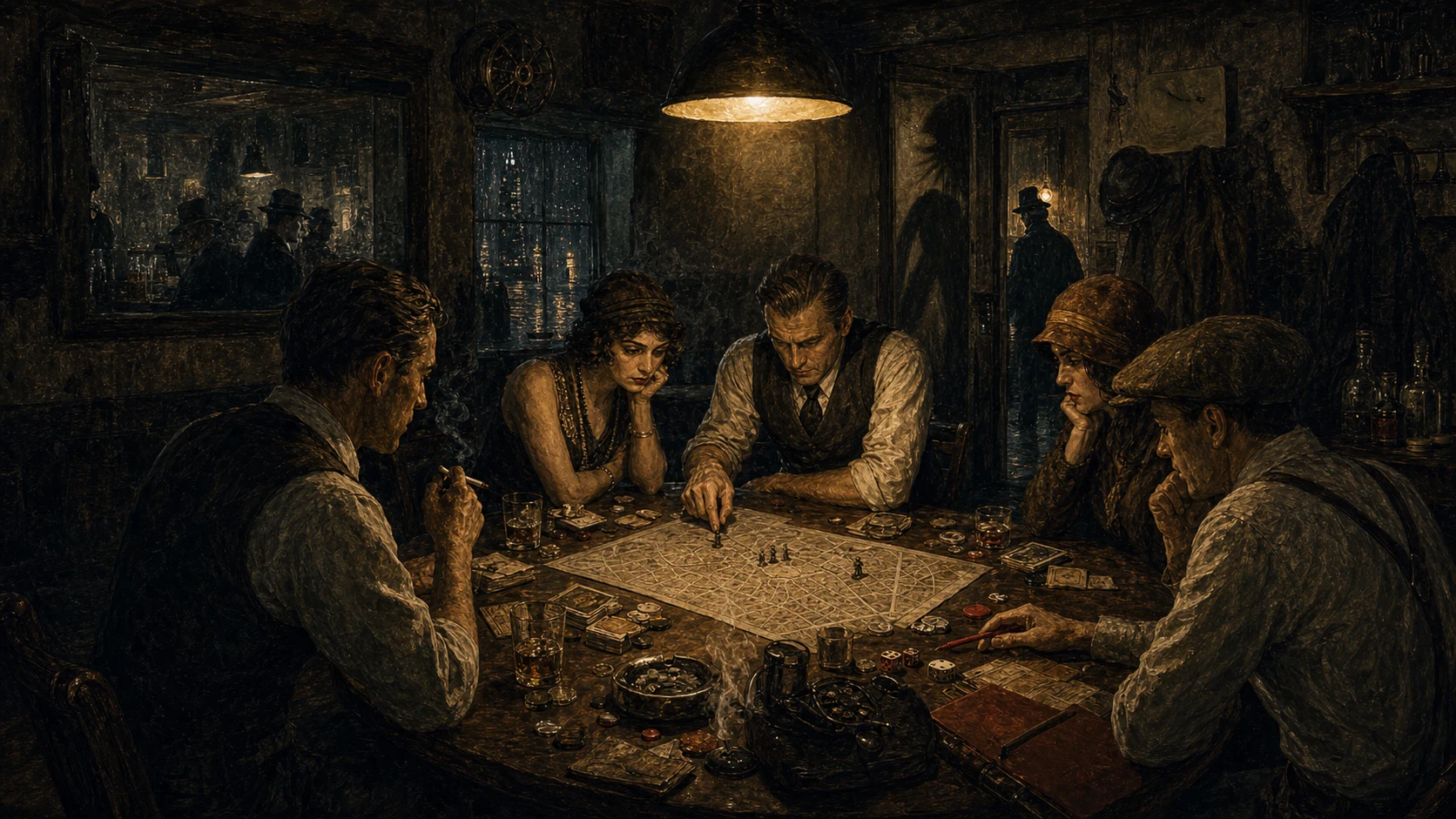
This example shows one short stretch of table play. It uses a room, a clue, a flashlight, and a narrow ruling. The scene stays with stable table advice: frame pressure, ask questions, consult gear, follow the consequence, and hand the next choice back to the players.
SourceProvenance detailsAI-generated or AI-assisted provenance details are available here.
Source details
This image source note preserves art attribution details.
issue-407-example-play-section-opener: Accepted provisional production-quality section opener art for Example Play while preserving future human replacement history.
The Setup
The investigators have followed a missing ledger to the back room of a closed speakeasy. The referee starts close to a choice:
"The front room is dark, but the bar mirror catches a strip of streetlight. The office door is open. Inside, a desk drawer hangs crooked, wet footprints cross the floorboards, and someone is coming down the alley stairs."
The referee does not explain the whole case. The frame gives the table enough to act: a room, a clue, a nearby pressure, and a reason not to wait.
Questions
The players ask questions before anyone reaches for dice. One asks whether the footprints are fresh. The referee answers plainly: yes, the water has not dried. Another asks whether the mirror shows the office doorway. The referee says it does, but only if someone moves the flashlight away from the desk.
That answer changes the room. The players know what they can learn, what they must expose, and what the approaching footsteps might interrupt.
SourceProvenance detailsAI-generated or AI-assisted provenance details are available here.
Source details
This image source note preserves art attribution details.
issue-408-example-play-speakeasy-receipt-artifact: Accepted provisional production-quality spot or artifact art for Example Play Speakeasy Receipt Artifact while preserving future human replacement history.
Risk
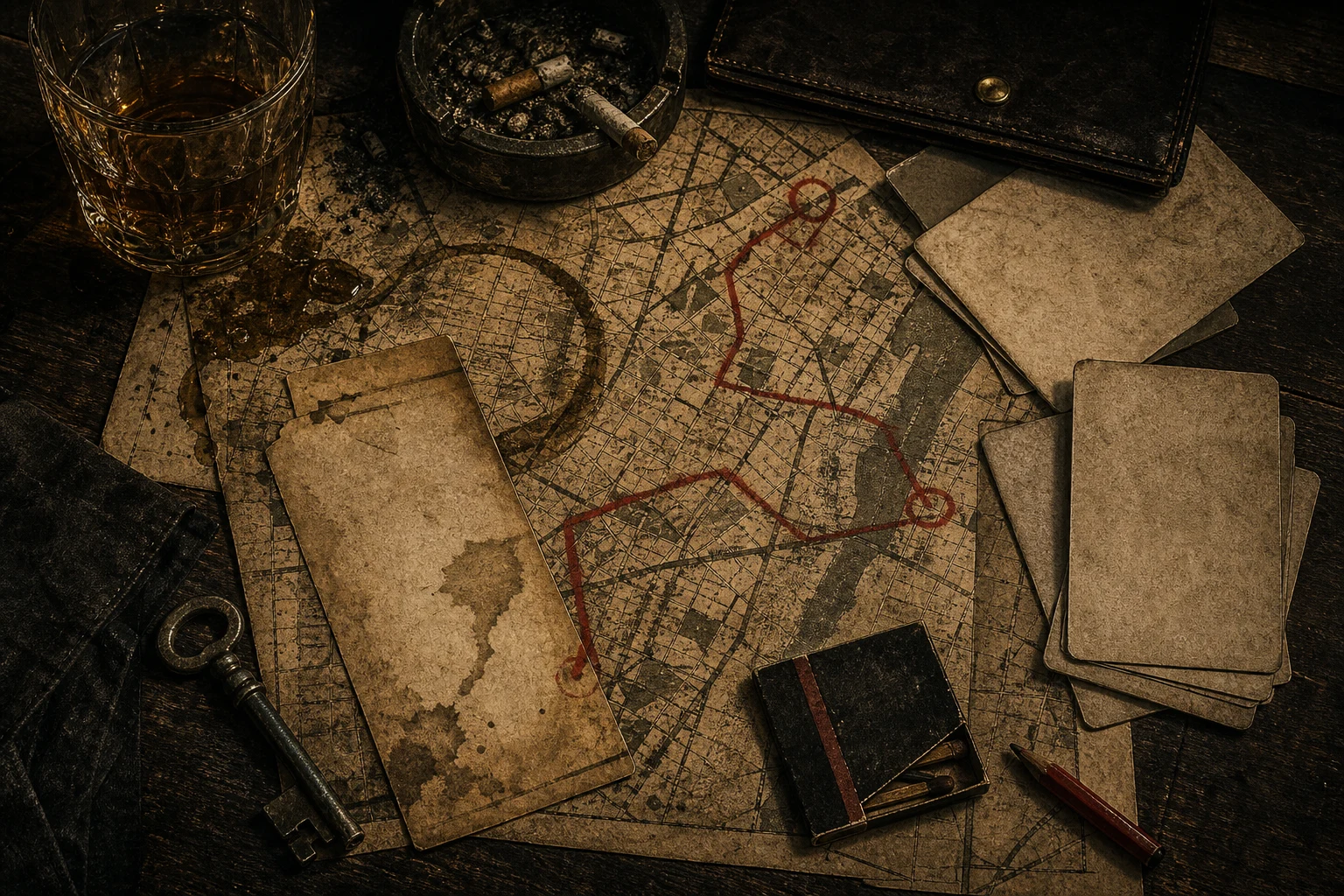
A player declares the action in the fiction: "I hand the flashlight to Mara, keep my shoulder against the office door, and pull the receipt from under the broken drawer before whoever is outside gets in."
The table pauses because the result is not obvious. The referee asks for intent and method. The player wants the receipt, uses the flashlight and the door, and accepts the risk of leaving evidence behind or being heard.
No exact check page is open at this table, so the referee makes the narrow ruling for this moment: if the player moves quickly, they get the receipt, but the door scrapes loud enough for the person outside to know someone is inside.
Lookup
The flashlight matters because it is gear on the sheet, not a mood word. The table opens the appendix to find the equipment references, then opens the Basic Gear Reference to confirm the concealed flashlight before using it to answer what the characters can see.
The lookup stays short. The table takes the answer it needs and returns to the room: the flashlight gives enough light to spot the receipt and the wet print under the desk, but it also paints the office door in a bright, guilty line.
Consequence
The referee gives the consequence and makes it the next frame.
"You have the receipt. It names the wrong date and a room upstairs. The door scrapes. The footsteps stop outside, and a voice says, 'Police.' The mirror shows no badge, only a hand inside a coat."
Nothing here closes the scene. The answer creates the next choice. The players can talk, hide the receipt, run through the kitchen, or stand in the doorway and force the stranger to show what is in the coat.
Handoff
The referee keeps the pace by naming what changed: the investigators found a lead, revealed their presence, and drew a threat into speaking distance. The next scene starts from those facts.
Use Running EldritchDark for the referee side of this handoff: frame the next choice, keep pressure visible, open references only when the fiction asks for them, and let the consequence stand.