Guide ChapterReferee Path
Manual notePage source detailsAI-generated or AI-assisted provenance details are available here.
Manual note details
This page source note preserves attribution details.
issue-388-running-placeholder-prose: Generated provisional referee-facing manual glue for issue 388 while avoiding new procedures, stat blocks, or hidden canon.
issue-439-referee-guidance: Rewrote the referee guide around session start, scene framing, uncertainty, pressure, consequences, and table reference use while preserving source boundaries for unresolved procedures.
Running EldritchDark
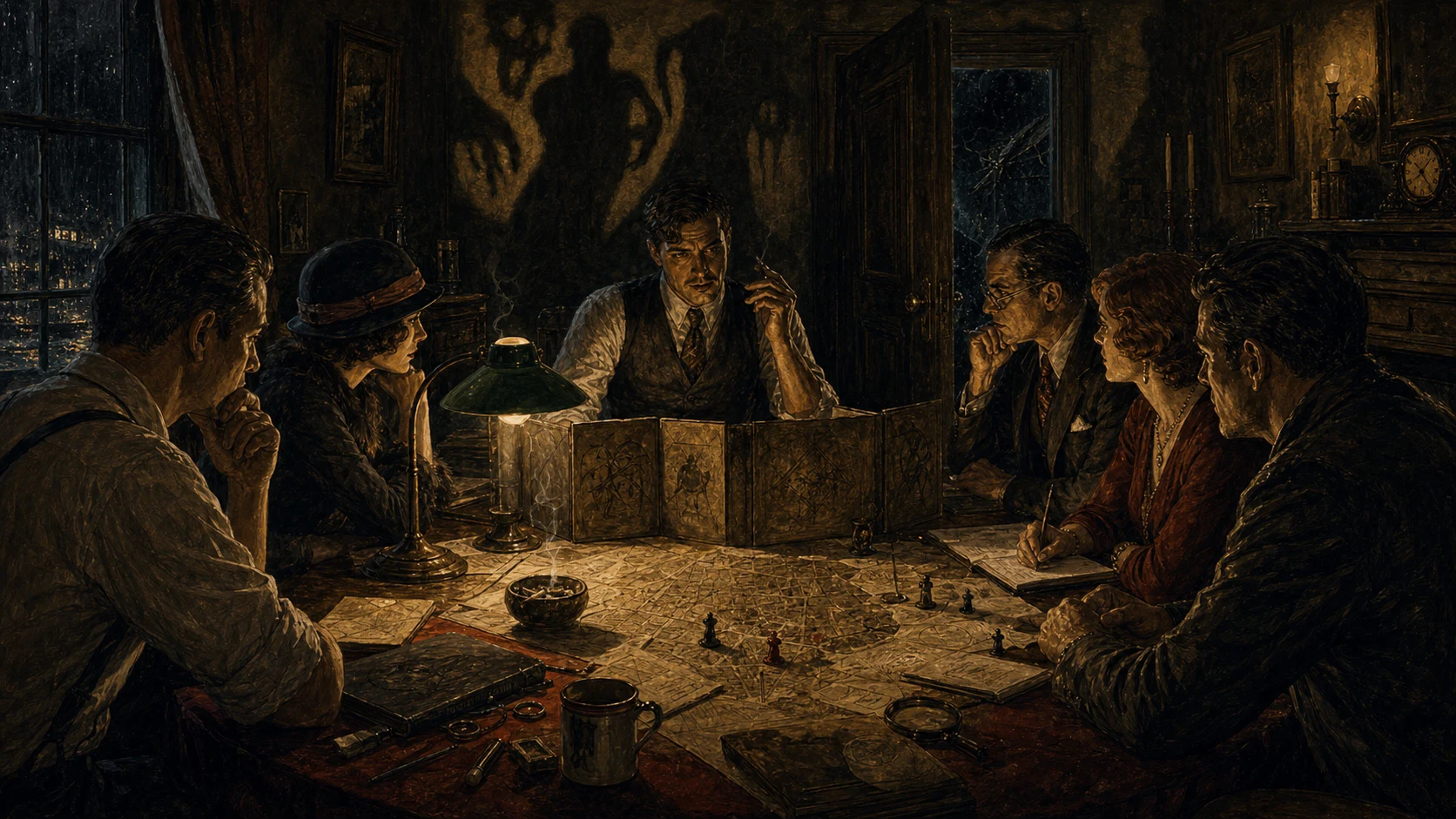
The referee does not need to explain every shadow. The referee needs a scene with pressure in it, a question the investigators can answer, and consequences that arrive in time to matter.
SourceProvenance detailsAI-generated or AI-assisted provenance details are available here.
Source details
This image source note preserves art attribution details.
issue-407-running-eldritchdark-section-opener: Accepted provisional production-quality section opener art for Running EldritchDark while preserving future human replacement history.
The Referee's Job
Prepare trouble, not a script. Know what is wrong, who wants the truth buried, what clue points deeper, and what danger moves if the investigators hesitate. Then bring only the next useful piece to the table.
During play, keep the table in the room. Say what the investigators can sense, what looks dangerous, who is present, and what choice is waiting. Ask what they do before you ask for a rule.
Use Core Play for the shared loop: frame, ask, act, answer. Use this page for the referee side of that loop.
Use Rules at the Table when uncertainty turns into a broader rules question: checks, DCs, danger, conflict, damage, recovery, rest, death, downtime, or advancement.
Start The Session
Open with a practical check-in. Make sure the investigators are ready, the players know the current case or problem, and the table can see the first place where danger might enter.
Start close to a choice. A phone rings after midnight. A landlord wants the room emptied before police arrive. A client lies badly. A locked cabinet smells like river mud. Give enough detail that players can ask sharp questions immediately.
Keep three things in reach before the first scene:
- A person, place, or object that can answer a question.
- A threat that gets worse when ignored.
- A reference page for any exact rule, item, job, or record likely to matter.
If a player needs a sheet answer, use the character guide or creator before the scene depends on it. At the table, the sheet should help action move, not become the whole action.
Frame The Next Scene
Frame one scene at a time. Tell the players where they are, what is obvious, what has changed, and what pressure is near enough to touch them.
Clues should enter play as things the investigators can handle: a witness who knows too much, a receipt with the wrong date, a coat that smells of salt, a holy symbol hammered into cheap wood. Give the obvious part plainly. Ask what they risk when they want the hidden part.
Threats should be visible before they land. Let players hear the stair creak, see the cultist stop smiling, watch the flashlight dim, or feel the room turn colder. A danger shown early creates a choice. A danger sprung from nowhere creates only surprise.
SourceProvenance detailsAI-generated or AI-assisted provenance details are available here.
Source details
This image source note preserves art attribution details.
issue-408-running-eldritchdark-case-clock-artifact: Accepted provisional production-quality spot or artifact art for Running EldritchDark Case Clock Artifact while preserving future human replacement history.
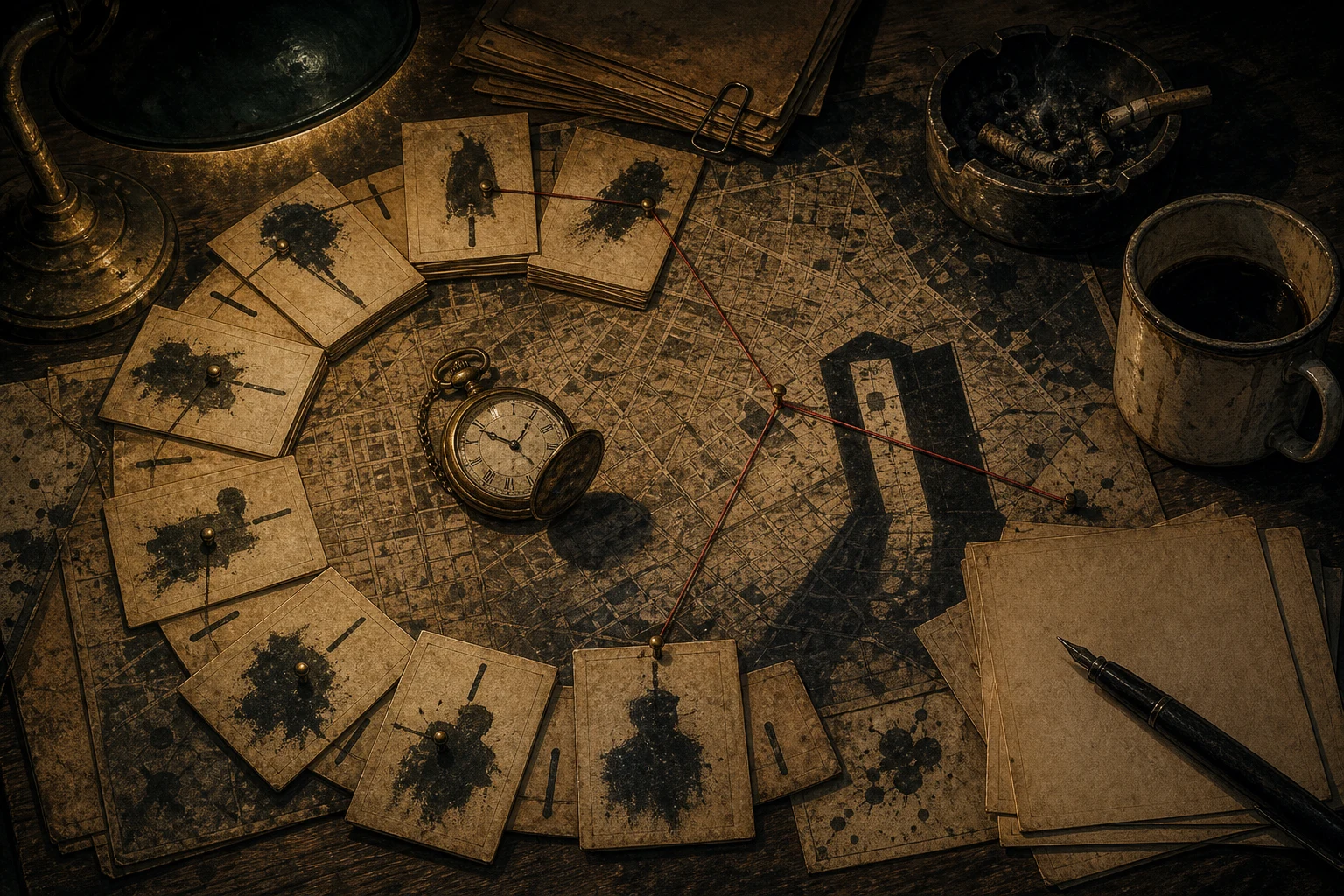
Use the Weird Age for texture and pressure: debt, class, police attention, tabloid hunger, bad faith, old money, new machines, and private terror under public respectability.
Adjudicate Uncertainty
When a player declares action, ask for intent and method. What are they trying to change? What are they using? What risk are they accepting? Once those answers are clear, choose the smallest table answer that fits.
If the result is obvious, say it and move on. If a referenced page names a rule, open that page, apply the exact entry, and bring the result back into the scene. If no exact procedure is in front of the table, state the likely risk, make the narrow ruling needed for this moment, and let the consequence stand.
Do not turn one special case into a law for the whole game. A job talent, weapon line, bauble entry, or spellcasting note can answer its own moment. It does not define every check, turn, rest, death, advancement, or act of magic.
Pressure And Consequences
Pressure is a cost the players can see before they choose. It can be time, noise, suspicion, pain, debt, weather, dwindling light, police interest, unnatural attention, or a witness deciding the investigators are not worth the risk.
Make pressure concrete in the fiction before it becomes a number. If the table already has an exact rule for timing, danger, combat, or recovery, use it. Otherwise, keep pressure visible through the scene: who arrives, what breaks, what closes, what is spent, and what becomes harder next.
Consequences should change the situation. A clue opens a worse door. A failed bargain makes a creditor. A fight draws witnesses. A broken tool makes the next room darker. A strange success leaves a mark nobody wants to explain.
Using References During Play
Open references after the fiction asks for them. Use the appendix to find the right drawer. Use gear and weapon pages when an item, property, price, damage line, or armor entry matters. Use job, species, worship, and magic-adjacent pages when a character record names the table answer.
Read the exact entry, decide only the point in front of the table, and return to the scene. The reference is there to settle the moment, not to pull the table out of the room.
Close The Night
End with the changed facts. Name the clues found, threats still moving, debts created, gear spent, injuries marked, people angered, and places that are no longer safe. If a rest, recovery, death, downtime, or advancement rule is in the table's source, apply that rule. If not, record the open state and begin next time from what changed.
Example Play belongs beside this page. The guide names the referee moves; the example shows those moves in table order: frame a scene, answer questions, call for references only when needed, and let consequences point to the next choice.